
Summit 2025 · Time for Action · 23 June 2025 · Square Brussels
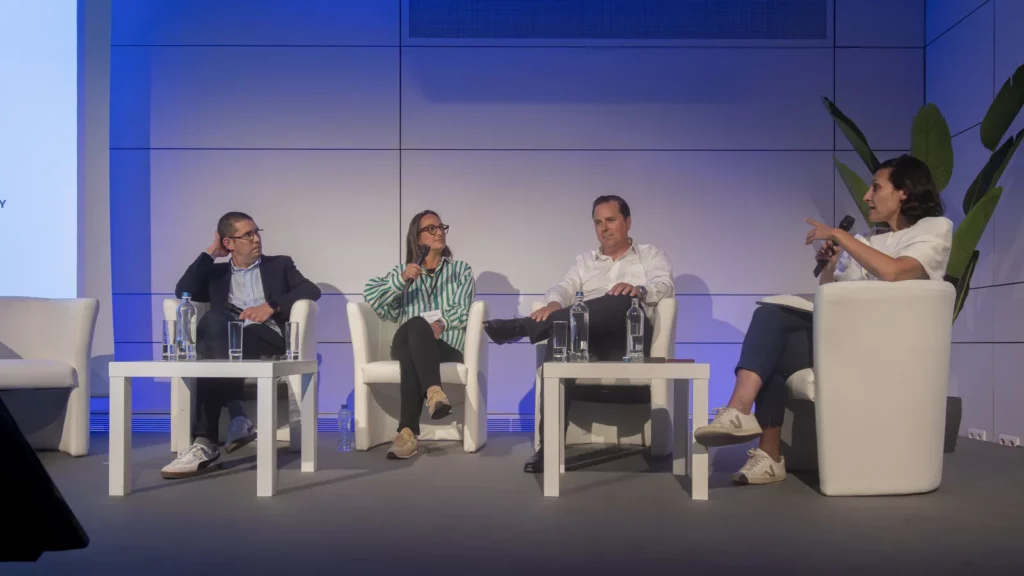
In June 2025 in Brussels, three leaders from tech and investment described what it takes to build sovereign technology in Europe: time, patient capital and partners. For two of them, sovereignty is also a market.
Key takeaways
- Sébastien Couet expected a few years of delay for Vertical Compute: partnerships must start now
- For Claire Munck, of BeAngels, investors need public leverage and funders at every stage
- For Alexandre Zapolsky, open source lets everyone try an innovation and build their own proof of concept
Vertical columns of data, connected directly to processing cores within a chip. The short video played by Sébastien Couet, co-founder and CTO of Vertical Compute, showed this architecture. The aim: to avoid the slow and energy-hungry journey of data to the core. According to him, the company does not do the compute part, and its core element is a memory 100 times denser than the competition.
Hardware takes time
At Vertical Compute, Sébastien Couet expected a few years’ delay before market launch, given a very complex supply chain. Partnerships must therefore start now. Hardware is expensive and slow to return money, he explained, which in principle does not attract investors. Yet the company closed its funding round in 48 hours, noted the moderator, Emmanuelle Ghislain, CEO of Pulse Foundation.
“This is really the picks and shovels of AI, and investors understand that.”
Sébastien Couet
Patient capital at scale
For Claire Munck, CEO of BeAngels, deep tech and hardware need “super patient capital”. She pointed to a gap in Europe: sizeable funds, and public-private partnerships with the critical mass to take enough risks, so that some companies succeed. In deep tech, an exit may come after 10 to 12 years rather than five to seven. Investors therefore need leverage from the public sector and a full chain of funders.
Alexandre Zapolsky, founder and CEO of Linagora, judged the classical venture capital model, built to multiply an investment within five to eight years, unfit for sovereign tech. He called for public banks and organisations to act as long-term strategic investors, at European level and in each country. He set another condition for a true digital sovereignty: tech players owned by European citizens or organisations.
Open source, a route to market
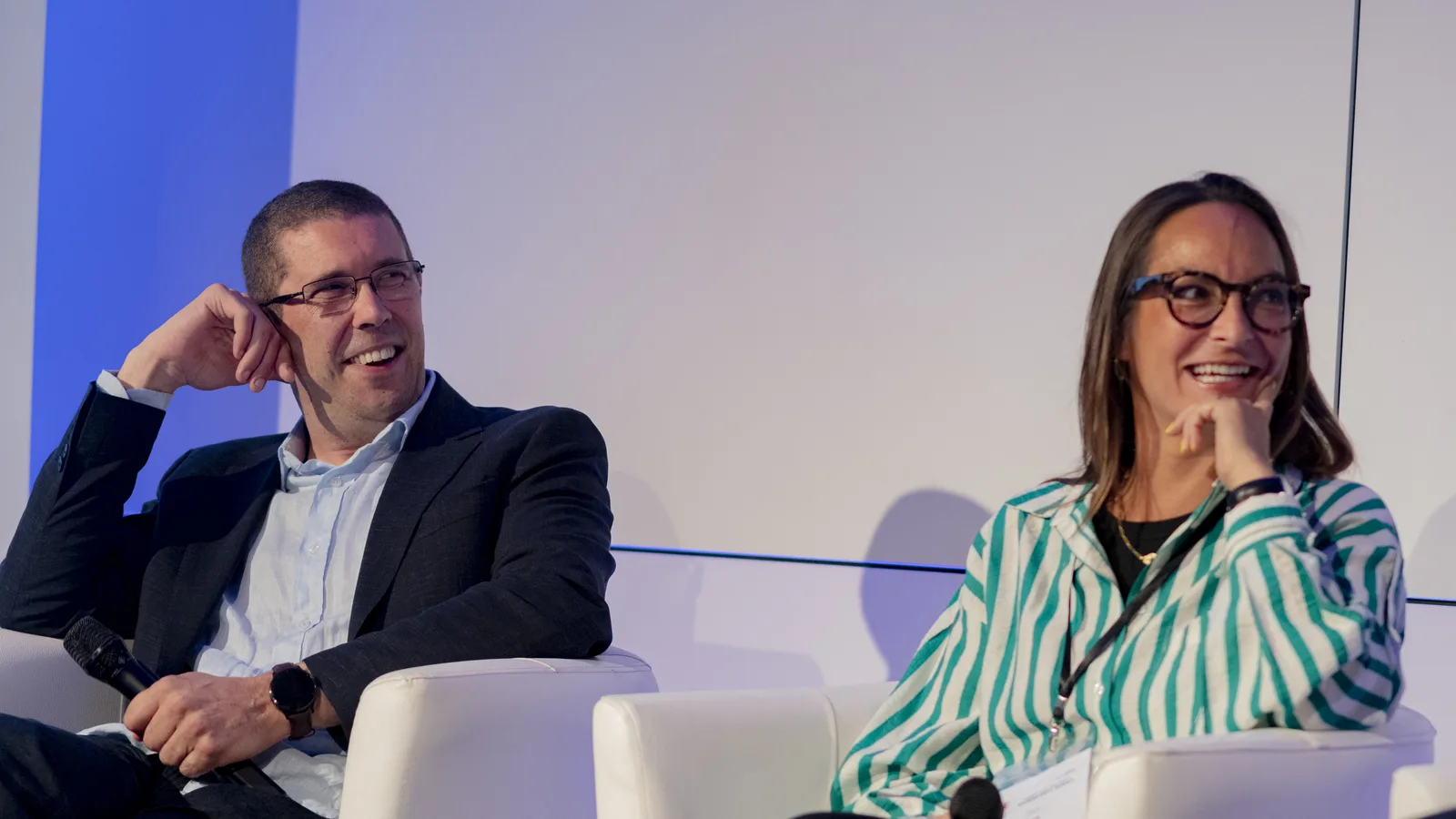
Open source, according to Alexandre Zapolsky, is a strong way to scale an innovation: people try it and run their own proof of concept. His company, Linagora, develops free and open-source software, including a digital workplace. It also works in open-source artificial intelligence. He cited one customer: the European Commission, which has deployed Linagora’s live transcription and translation platform in 1,100 meeting rooms.
Could open source work for hardware? Sébastien Couet is considering a partial opening: the company wants to keep some parts, but could open the design part to foster adoption. The easy path would be to develop the technology and be bought by one of the big AI hardware players. The challenge is to stay as independent as possible, and to find another avenue inside Europe. His advice to innovators: bring their core values to work. His own: Europe and people.
A market for European innovators
Claire Munck took the example of Passbolt, a Luxembourg-based company in the BeAngels portfolio. Specialising in open-source password management, it has very big clients in the US. Her message: “Sovereignty is about business. It’s not only about public policy and protectionism.”
Alexandre Zapolsky sees sovereignty as a true market, with a place for European innovators. In his view, chief executives of large companies, not only IT leaders, are now concerned by it. They have understood the risk of putting all their eggs in the same basket. “It comes from the top. That’s completely new.”
The third French Tech Sovereignty Summit Brussels takes place on 28 January 2027 at BNP Paribas Fortis, Brussels.