
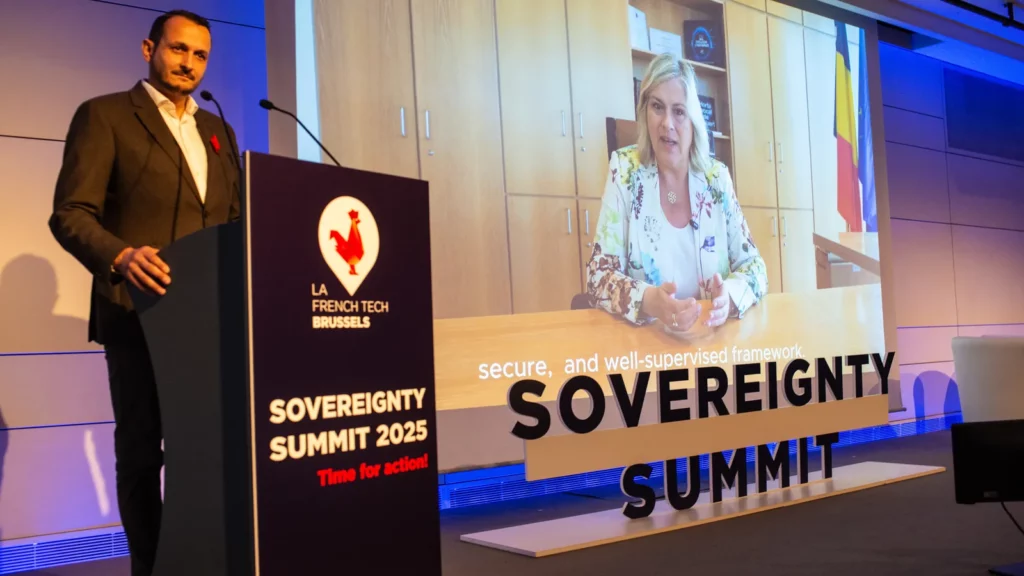
Summit 2025 · Time for Action · 23 June 2025 · Square Brussels
Opening the second French Tech Sovereignty Summit Brussels in June 2025, Samuel Profumo described digital sovereignty as having become an operational need. In a video message, Belgian minister Vanessa Matz made the case for backing innovation without relaxing ethical and democratic standards.
Key takeaways
- Samuel Profumo described sovereignty as freedom: to choose partners and to control dependencies
- Vanessa Matz referred to her commitment to a Belgian scheme, due by 2026, where start-ups will test their solutions
- She counts the European regulations on digital services and on artificial intelligence among the first milestones of a solid framework
It is no longer theory, nor a white paper. For Samuel Profumo, president of La French Tech Brussels, digital sovereignty is happening now: “It’s not just a policy goal anymore. It’s become an operational need.”
What has changed since Flagey
Samuel Profumo looked back at the first edition, a year earlier at Flagey. Digital sovereignty was then emerging as a key challenge for all ecosystems. Since then, geopolitical tensions have grown, generative AI is rewriting the rules and tech supply chains are being reshaped in real time.
According to him, European data is still flowing through non-European systems. Even European institutions, he noted, were looking for trusted alternatives to host their most critical services.
No walls, no retreat
Along the way, Samuel Profumo explained, the team learned a lesson. Sovereignty does not mean closing doors or building walls. It is not about nostalgia or retreat, and it is not the enemy of innovation. “Sovereignty is about freedom. Freedom to choose our partners instead of being forced to accept them.”
For the speaker, it is also the freedom to control dependencies instead of discovering them in the middle of a crisis. In concrete terms, this means owning infrastructure and backing European tech champions. He rejected a zero-sum game between sovereignty and performance. He spoke in favour of open ecosystems, as long as they serve long-term autonomy.
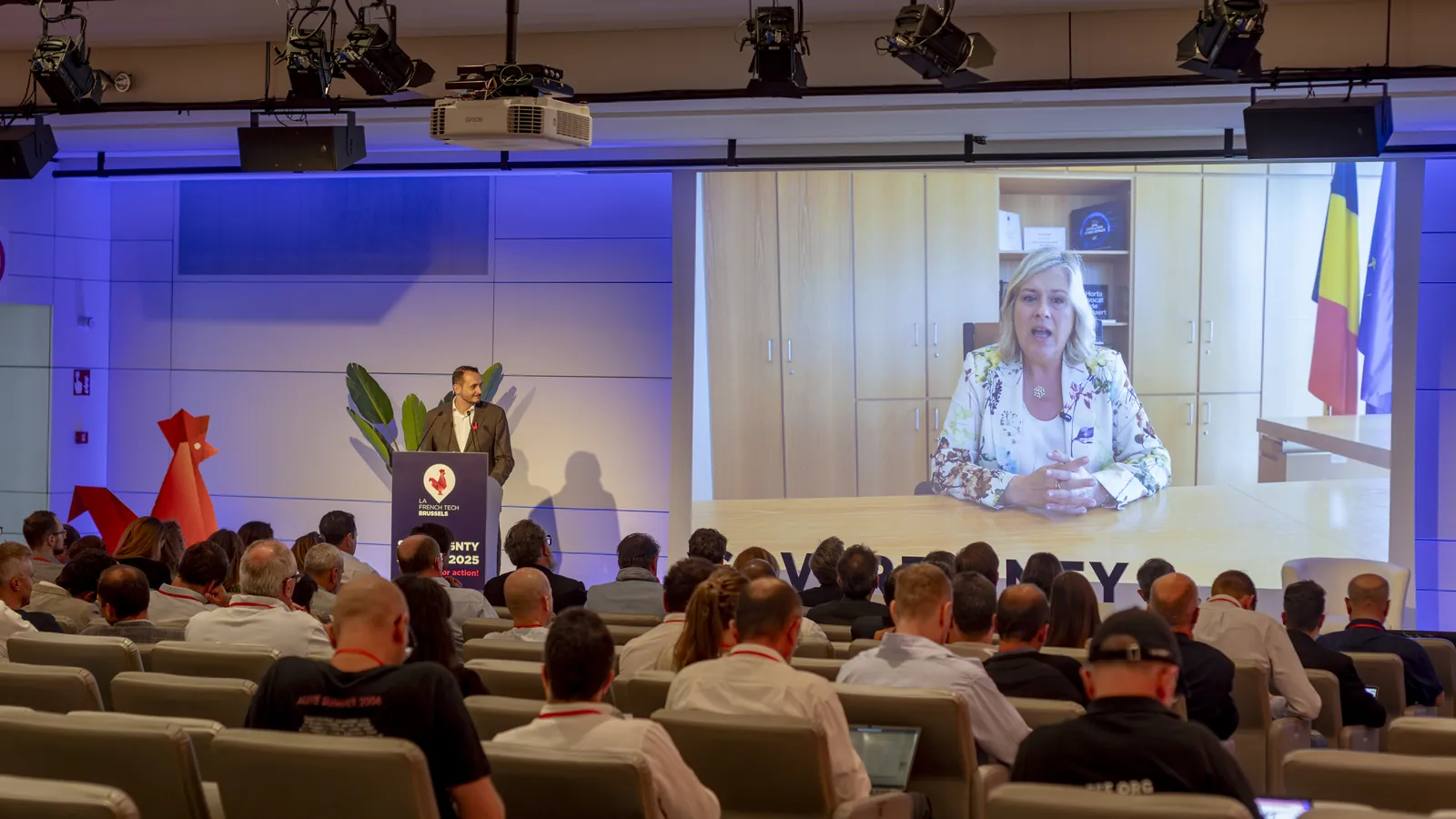
From Chile, Vanessa Matz makes her case
The Belgian minister in charge of digital affairs recorded her message before the summit. In it, she explained that during the event she would be on the other side of the world, in Chile, on a state visit alongside the King and Queen.
Her conviction: there must be an environment that favours innovation, while remaining demanding on ethical and democratic grounds. She referred to her commitment to a scheme to be set up in Belgium by 2026. Start-ups will be able to test their solutions there in a flexible, secure and supervised framework.
Bringing a European framework to life
The minister listed the first milestones of a solid European framework. The Digital Services Act and the AI Act are among them, along with an AI action plan and targeted investments in critical technologies. This framework only makes sense if it rests on a concrete, dynamic and committed ecosystem. She named Odoo and Vertical Compute, as well as many start-ups from Belgian universities, as examples.
Digital transformation, she went on, must not benefit only a few large companies. It must serve society as a whole, including citizens, SMEs and public services, and respect European values of transparency, inclusion and responsibility.
She summed it up: “Yes, it is possible to build a high-performing, sovereign and responsible European technology.”
Partners named at the opening: Expleo (platinum partner), Beyond Law Firm and Pierstone (legal partners) and Gcore.
The third French Tech Sovereignty Summit Brussels takes place on 28 January 2027 at BNP Paribas Fortis, Brussels.