
Summit 2025 · Time for Action · 23 June 2025 · Square Brussels
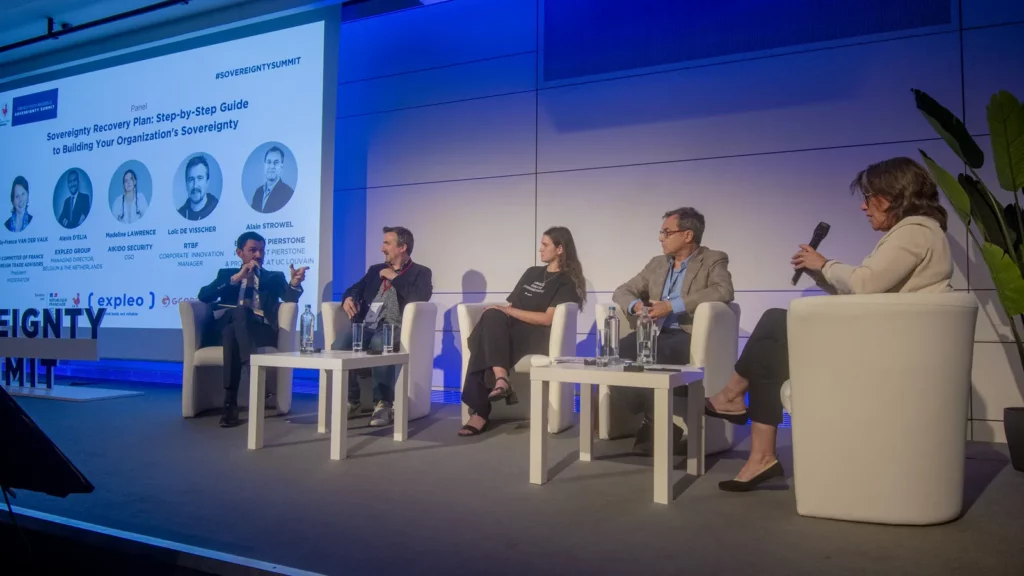
In June 2025 in Brussels, a lawyer, two business leaders and an RTBF manager explained where to start when building digital sovereignty. Their answer combines a method and pragmatism, with the world as the horizon.
Key takeaways
- For the lawyer Alain Strowel, being sovereign also means being able to use services on one’s own territory
- Alexis D’Elia presented Expleo’s plan: four dimensions, seven gradual pillars, an exposure index
- For Madeline Lawrence, being European is not enough: a provider must also be better, cheaper or a better fit
Before building sovereignty, one has to know what it covers. “I think there is a lot of uncertainty about what exactly digital sovereignty means,” observed Alain Strowel, partner at Pierstone and professor at UCLouvain. For some people, the term is a synonym of strategic autonomy. The lawyer raised another issue, territorial sovereignty: being able to enjoy services on one’s own territory. He sees part of the answer in a cybersecurity certification scheme in which no authority outside the European Union can control the top tier.
Mapping before choosing
Alexis D’Elia, Managing Director Belgium and The Netherlands at Expleo Group, distinguished four kinds of clients. Some see digital sovereignty as an obligation, others as an opportunity or as a risk. Others do not know where they stand. To address this, Expleo has developed a digital sovereignty recovery plan. It covers four dimensions, cyber, data, technology and control, and translates them into seven gradual pillars. The result is a sovereignty exposure index.
The method presented by Alexis D’Elia comes in a few steps. Map the current technology landscape. Identify the regulation that applies to the business, European or not. Flag what is critical. Look at which European tools and ecosystems can be used. Finally, build a long-term master plan. Someone must be in charge of managing it.
For Alexis D’Elia, sovereignty is not only a legal and technological matter. It also involves finance, workers and skills. He named one blocker: thinking only in a single, technological dimension rather than broadly. Alain Strowel, for his part, asked organisations to raise awareness of dependencies among their people.
Keeping the link with the audience
Loïc De Visscher, Corporate Innovation Manager at RTBF, placed sovereignty at the core of a public service media’s work. To fulfil its public missions, the broadcaster must keep a sovereign link with its audience, whatever the intermediaries. RTBF reaches the youngest audiences where they are. But it follows a repatriation strategy that brings them back to its own brands and platforms.
“For some services, we are clearly going sovereign,” Loïc De Visscher said. His examples: RTBF owns and develops its recommendation algorithm. It has also decided to acquire computing capacity on premise, to run open-source AI models. The aim: to let journalists process sensitive data about sources and whistleblowers. The RTBF manager further pointed to fragmentation, and called for working with competitors to pool capabilities.
Better first, sovereign as well
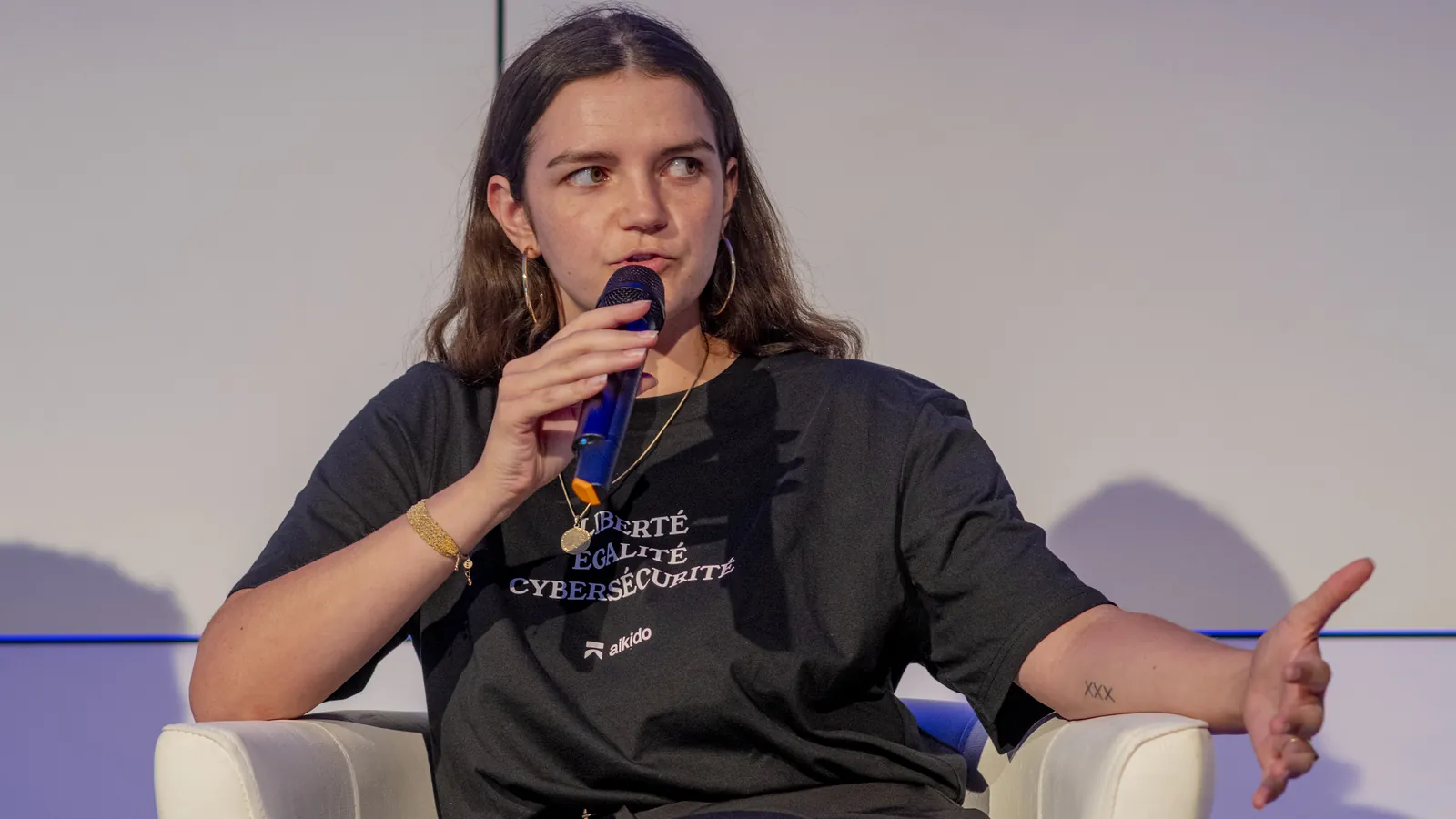
Madeline Lawrence, Chief Growth Officer of Aikido Security, would not recommend switching to a European provider only because it is European. It must also be better, more cost-effective or a better fit. According to this former partner at a venture capital fund, around 53 per cent of her company’s customers are North American. Being European and sovereign often plays a part, she added, but customers choose the company because it performs better and is more cost-effective.
To small and medium-sized enterprises, Madeline Lawrence recommended pragmatism. Sovereignty should come first where it unlocks growth, or in sensitive sectors such as health tech or fintech. More broadly, her view fits in one sentence: “So be born in Europe, but be built for the world.”
Where to start? With a question, concluded the moderator, Marie-France Van der Valk, of France’s Foreign Trade Advisors. Every organisation should first ask itself whether it is dependent, or not.
The third French Tech Sovereignty Summit Brussels takes place on 28 January 2027 at BNP Paribas Fortis, Brussels.